

What is sunscreen and how does it work?
Sunscreen is a substance that aids in protecting the skin from the sun’s harmful rays. Sunscreen is usually in the form of a cream, lotion or gel. Other forms of sunscreen can be powder and a spray. There are many different types of rays present in sunlight. The rays that are most damaging to our skin are called ultraviolet (UV) rays. There are two basic types of ultraviolet rays that reach the earth’s surface—UVB and UVA. UVB rays are responsible for producing sunburn. UVA rays penetrate more deeply into the skin and play a greater role in premature skin ageing, including wrinkle formation. Sunscreens work by reflecting, absorbing and scattering both UV A and B rays. Sunscreens contain active ingredients that enable them to carry out their function. Organic or chemical sunscreens contain ingredients like avobenzone, octinoxate, oxybenzone, Tinosorb S and M. Mineral or inorganic sunscreens contain zinc or titanium dioxide.
BENEFITS OF WEARING SUNSCREEN
1. Sunscreen is vital for skin anti-ageing
Continuous long-term exposure to sunlight causes a type of skin ageing known as photoaging. This is characterized by the formation of wrinkles and dark spots on the skin. This can be a natural ageing sequala for the skin but sun exposure without protection can cause this to happen prematurely. Sunscreen use is considered the most effective way of preventing skin ageing. Sun damage from UV rays causes skin photoaging, which is characterized by a breakdown of collagen, which contributes to lines, sagging and wrinkles. Studies show that those below age 55 who apply sunscreen regularly have less chance of developing these signs of ageing prematurely than those who don’t. This can be seen commonly seen among people from Korea who prioritized sun protection long before the rest of the world. They tend to have more youthful-looking skin.
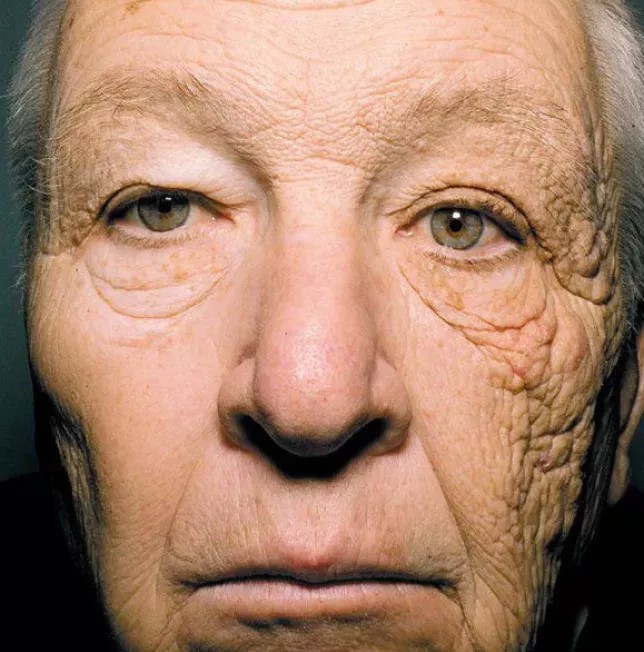
Photo image of a truck driver showing the effects of 24 years of UV exposure.
One side of the face (window facing) has aged more than the other
2. Prevent and minimize hyperpigmentation
Hyperpigmentation appears as darkened patches or spots on the skin that make it look uneven. Hyperpigmentation typically appears on areas of skin that are regularly exposed to the sun such as the face and hands and it is caused by increased melanin production. Melanin is a dark brown to black pigment substance in your body that produces hair, eye and skin pigmentation. Melanin is responsible for the darkening of skin exposed to sunlight. The more melanin you produce, the darker your eyes, hair and skin will be. Sunscreen helps prevent discoloration and dark spots from sun damage, helping you maintain a smoother and more even skin tone.
For skin that already has hyperpigmentation, if combined with anti-hyperpigmentation treatments, the use of sunscreen can accelerate the return to an even skin tone
3. Sunscreen prevents sunburn
Sunburn is inflamed, painful skin that feels hot to the touch. It often appears within a few hours of being in the sun too long. Though less common in darker skin tones, sunburns do occur after prolonged exposure to UV rays. Sunburns can range from mild to severe and are painful, associated with redness and sometimes can even form blisters which can get infected. You’re most likely to get sunburn in the middle of the day (10 AM to 3 PM) because that’s when UV rays are strongest. This is more common during outdoor activities like swimming, hiking, mountain climbing, etc. Use of sunscreen and sun protective clothing such as wide brim hats can minimize the risk of getting sunburns
4. Reduce Inflammation
When our skin is exposed to UV rays it can cause painful redness and inflammation. This can be especially challenging for individuals with skin issues like psoriasis (flaky patches of the skin that form scales) or rosacea. Wearing sunscreen each day helps to prevent inflammation from harmful rays thus minimizing flare-ups of such inflammatory conditions
5. Anti-oxidation benefits
Many sunscreens contain antioxidants such as vitamin E, green tea extract etc. Anti-oxidants are substances that protect the skin from oxidative damage (free radicals). Free radicals are unstable atoms that can damage cells, causing illness and aging. Oxidative stress due to free radicals can lead to age-related changes in appearance, such as loss of skin elasticity, wrinkles, graying hair, hair loss and changes in hair texture. These free radicals can cause premature skin ageing
6. Reduce the risk of skin cancers
Most skin cancer is caused by UV rays damaging the DNA in the skin. Skin cancer is often diagnosed at a later stage in people of color than in whites. That’s partly because of a lack of awareness about the risks and the fact that skin cancer is less common in darker skin so may be easily missed
7. Prevention of Dermatosis Papulosa Nigra (DPN)
The exact cause of DPN is unknown but these are benign or non cancerous dark bumps commonly on the face and neck. DPN lesions can be removed in a dermatologist’s office in several ways including laser therapy. Sun protection through sunscreen and sun protective clothing is encouraged to prevent further formation of DPN.
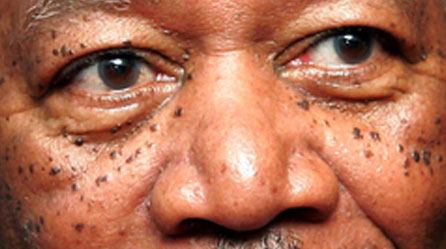
Photo showing DPN on the face
Thank you for the article. Very informative
Thanks for enlightening me.